





The mortal kombat games series stands as one of the most iconic franchises in video game history. Since its debut in 1992, it has captivated players with intense battles, memorable characters, and groundbreaking gore. This guide dives deep into the background of mortal kombat games, tracing their origins, key developments, and lasting influence. Whether you’re a longtime fan or new to the realm, you’ll find helpful insights to enhance your experience.
Ed Boon and John Tobias created the first Mortal Kombat game as a response to popular fighters like Street Fighter II. They aimed to stand out with digitized actors and extreme violence. Midway Games developed it, and it quickly became a hit in arcades. Over the years, the series evolved under different studios, including NetherRealm after Warner Bros. acquired the team in 2009. This shift brought fresh ideas while keeping the core spirit alive.
The franchise’s career spans over three decades, with sales topping 100 million copies. Achievements include sparking the ESRB rating system and inspiring pop culture references in music and films. We cover all that and more below.
The Origins of Mortal Kombat Games
The story of mortal kombat games begins in 1991. A small team at Midway in Chicago started work on a ninja-themed fighter. Inspired by movies like Enter the Dragon and Bloodsport, they pitched a game starring Jean-Claude Van Damme. When that fell through, they focused on original characters and brutal moves.
Ed Boon handled programming, John Tobias did art and story, John Vogel managed graphics, and Dan Forden created sounds. They drew from Chinese myths and Shaolin lore. The title “Mortal Kombat” came after trademark issues, with Steve Ritchie suggesting the “K” spelling—a trend that stuck.
The game hit arcades in 1992. It sold well due to its simple controls and shocking fatalities. Ports to home consoles like Genesis and SNES followed, but with changes to tone down violence in some versions.
Why did it succeed? It offered something new: graphic finishes that made players gasp. This set the stage for sequels and spin-offs.
Timeline of Mortal Kombat Games Releases
To understand the series’ growth, let’s break down the releases in order. This timeline shows how mortal kombat games shifted from 2D arcades to 3D consoles and beyond.
- 1992: Mortal Kombat – Arcade debut. Platforms: Arcade, Genesis, SNES, Game Boy. Key feature: Digitized sprites and first fatalities. Plot: Earthrealm warriors fight in Shang Tsung’s tournament to save their world.
- 1993: Mortal Kombat II – Added more characters and moves. Platforms: Arcade, Genesis, SNES, Game Boy. Introduced hidden fighters like Jade and Noob Saibot.
- 1995: Mortal Kombat 3 – New combos and run button. Platforms: Arcade, Genesis, SNES, PS1. Story: Shao Kahn invades Earthrealm.
- 1995: Ultimate Mortal Kombat 3 – Expanded roster. Platforms: Arcade, Saturn, PS1. Included more stages and animalities.
- 1996: Mortal Kombat Trilogy – Compilation of first three games. Platforms: PS1, N64. Featured updated graphics and all characters.
- 1997: Mortal Kombat 4 – First 3D entry. Platforms: Arcade, PS1, N64, PC. Plot: Shinnok’s rise from the Netherrealm.
- 1999: Mortal Kombat Gold – Enhanced version of MK4. Platforms: Dreamcast. Added new characters like Baraka.
- 2002: Mortal Kombat: Deadly Alliance – Console-focused. Platforms: PS2, Xbox, GameCube. Story: Shang Tsung and Quan Chi team up.
- 2004: Mortal Kombat: Deception – Added puzzle modes. Platforms: PS2, Xbox, GameCube. Introduced death traps and hara-kiri.
- 2006: Mortal Kombat: Armageddon – All characters return. Platforms: PS2, Xbox, Wii. Final battle before reboot.
- 2008: Mortal Kombat vs. DC Universe – Crossover with superheroes. Platforms: PS3, Xbox 360. Non-canon fun with rage mode.
- 2011: Mortal Kombat – Reboot retelling first three games. Platforms: PS3, Xbox 360, Vita. Back to 2D plane with 3D models.
- 2015: Mortal Kombat X – Character variations. Platforms: PS4, Xbox One, PC. Story: Next generation fighters like Cassie Cage.
- 2019: Mortal Kombat 11 – Time travel plot. Platforms: PS4, Xbox One, Switch, PC. Featured custom gear and guest stars.
- 2023: Mortal Kombat 1 – Second reboot. Platforms: PS5, Xbox Series X/S, Switch, PC. New universe by Fire God Liu Kang.
- 2025: Mortal Kombat: Legacy Kollection – Remastered classics. Platforms: Modern consoles. Celebrates early games with updates.
This timeline highlights the series’ adaptability. Early games focused on arcades, while later ones embraced online play and story modes.
Key Characters in Mortal Kombat Games
Characters make mortal kombat games unforgettable. They come from realms like Earthrealm, Outworld, and Netherrealm. Each has unique moves and backstories.
Let’s list some standouts:
- Scorpion: Hell-bent ninja seeking revenge. Signature move: “Get over here!” spear. Appears in nearly every game.
- Sub-Zero: Ice-wielding assassin from Lin Kuei clan. Evolves from Bi-Han to Kuai Liang across timelines.
- Raiden: Thunder god protecting Earthrealm. Guides heroes through tournaments.
- Liu Kang: Shaolin monk and champion. Becomes Fire God in recent reboots.
- Sonya Blade: Special forces agent. Focuses on tech and combat skills.
- Johnny Cage: Hollywood star turned fighter. Adds humor with flashy moves.
- Shao Kahn: Outworld emperor and main villain. Wields a massive hammer.
- Kitana: Edenian princess with fans as weapons. Often allies with heroes.
- Shang Tsung: Sorcerer who steals souls. Shape-shifts into others.
- Goro: Four-armed Shokan prince. First sub-boss, iconic for strength.
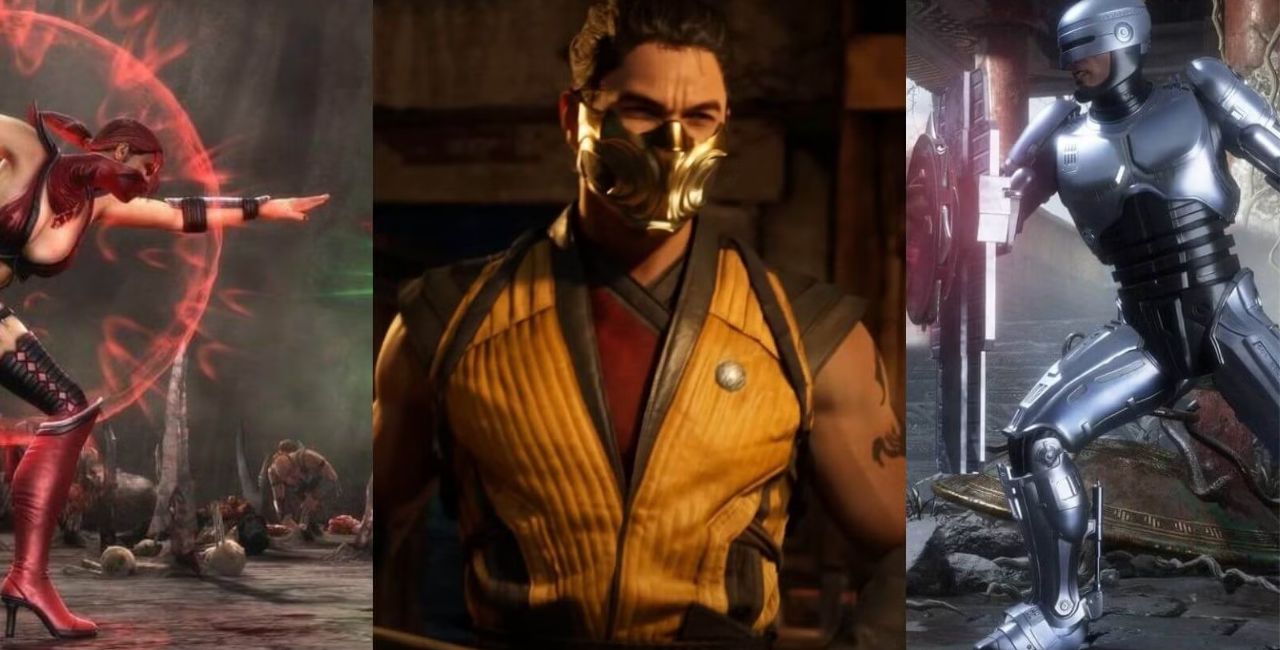
Guest characters add excitement. Examples include Kratos in 2011’s Mortal Kombat, Freddy Krueger in MKX, and Terminator in MK11. In 2025, crossovers like Fortnite integrated Sub-Zero and Scorpion skins.
These fighters evolve with each game. For instance, Scorpion’s undead status ties into deep lore. Fans love debating favorites—try playing as different ones to find yours.
Gameplay Mechanics That Define Mortal Kombat Games
What sets mortal kombat games apart? Innovative mechanics keep fights fresh.
- Fatalities: Finishers that end matches with gore. Examples: Scorpion’s fire breath or Sub-Zero’s spine rip.
- Brutalities: Combo-based kills in later games.
- Animalities and Babalities: Turn foes into animals or babies—fun twists from MK3.
- X-Ray Moves: In MKX and beyond, show internal damage in slow motion.
- Variations: MKX lets you customize fighter styles, like aggressive or defensive.
- Krypt Mode: Exploration areas to unlock items, starting in Deadly Alliance.
Early games used limb-based buttons (high punch, low kick). Modern ones add blocks and specials. Tips for beginners: Practice combos in training mode. Master blocking to counter attacks. Experiment with characters to learn matchups.
The series also includes minigames like Chess Kombat in Deception or Puzzle Kombat. These breaks from fighting add variety.
Spin-Offs and Non-Fighting Mortal Kombat Games
Not all mortal kombat games are fighters. Spin-offs explore other genres.
- 1997: Mortal Kombat Mythologies: Sub-Zero – Action-adventure. Play as Sub-Zero in a prequel. Platforms: PS1, N64. Focus: Platforming and puzzles.
- 2000: Mortal Kombat: Special Forces – Third-person shooter. Follow Jax against Black Dragon. Platforms: PS1. Received mixed reviews for controls.
- 2005: Mortal Kombat: Shaolin Monks – Beat ’em up. Co-op with Liu Kang and Kung Lao. Platforms: PS2, Xbox. Alternate story between MK1 and MK2.
- 2015: Mortal Kombat Mobile – Free-to-play card battler. Platforms: iOS, Android. Ties into MKX with collectible characters.
- 2023: Mortal Kombat: Onslaught – RPG action. Platforms: Mobile. New timeline; shut down in 2024 due to low engagement.
These expand the universe. Shaolin Monks stands out for fun co-op—great for playing with friends.
Controversies Surrounding Mortal Kombat Games
Mortal Kombat games sparked debates from day one. Their violence led to major changes in the industry.
In 1993, U.S. Senate hearings targeted the series. Senators like Joe Lieberman criticized gore in home ports. This pushed for the ESRB in 1994, rating games M for Mature.
Bans followed: Germany indexed early titles until 2015. Australia refused classification for MK 2011 until 2013. MK11 was banned in Indonesia, Japan, and Ukraine for graphic content.
Other issues: Accusations of sexism in character designs and racism in stereotypes. Developers faced PTSD from creating fatalities, as noted in interviews.
Despite this, the controversy boosted sales. It made Mortal Kombat a symbol of mature gaming. Today, ratings help parents choose wisely.
For more on the history, check the Wikipedia page on Mortal Kombat.
The Cultural Impact of Mortal Kombat Games
Mortal Kombat games shaped gaming and beyond. With over 100 million units sold, it’s the top fighting franchise per Guinness Records.
It inspired clones like Killer Instinct and Primal Rage. Esports events like EVO feature MK tournaments annually.
Pop culture nods: Songs by Wale and Nicki Minaj reference it. TV shows like Malcolm in the Middle parody fatalities. Films and series extend the brand.
Statistics: The 1995 movie grossed $125 million. The 2021 reboot hit HBO Max during COVID. In 2025, a classics collection relaunched, as announced in recent news.
The series promotes diversity with global myths. It reassures fans that gaming can be bold yet fun.
For fan insights, visit the Mortal Kombat Fandom wiki.
Media Adaptations from Mortal Kombat Games
The franchise jumped to other media, expanding its reach.
- Films: 1995’s Mortal Kombat starred Christopher Lambert as Raiden. Sequel Annihilation in 1997 flopped. 2021 reboot mixed reviews but strong streaming.
- Animated: Mortal Kombat Legends series (2020 onward) like Scorpion’s Revenge.
- TV: Defenders of the Realm (1996 animated), Conquest (1998 live-action).
- Web Series: Mortal Kombat: Legacy (2011-2013) with Michael Jai White.
- Comics: Malibu and DC runs, tying into games.
- Other: Novels, card games, and a 1995-1996 live tour.
These adaptations bring stories to life. The IMDB list of all Mortal Kombat games includes ratings for related media.
Design Elements in Mortal Kombat Games
Game design plays a big role. Digitized actors gave realism in early titles. Sound effects like “Toasty!” became memes.
Fonts and visuals stand out—bold, bloody styles. For custom fonts in gaming, creators draw from various sources.
Modern games use Unreal Engine for stunning graphics. Tips: Adjust settings for smoother play on PC.
Tips for Playing Mortal Kombat Games Today
Ready to jump in? Follow these steps:
- Choose a Game: Start with the 2011 reboot for story basics.
- Learn Basics: Master punches, kicks, and blocks.
- Practice Fatalities: Input codes after “Finish Him!”
- Go Online: Join ranked matches for competition.
- Unlock Content: Explore Krypts for extras.
These make gaming reassuring and fun. No need to be pro—enjoy the fights.
FAQs About Mortal Kombat Games
What is the first Mortal Kombat game?
The original mortal kombat games entry launched in 1992 as an arcade fighter.
How many Mortal Kombat games are there?
Over 20 main and spin-off mortal kombat games, including reboots up to 2025.
Who are the main villains in Mortal Kombat games?
Shao Kahn, Shang Tsung, and Shinnok lead the threats in mortal kombat games.
Are Mortal Kombat games still controversial?
Early violence sparked debates, but modern mortal kombat games use ratings to guide players.
What’s next for Mortal Kombat games?
After 2025’s Legacy Kollection, fans await new announcements for mortal kombat games.
Conclusion
In summary, mortal kombat games have revolutionized fighting genres with epic stories, diverse characters, and bold mechanics. From arcade roots to 2025 remasters, the series delivers thrills and controversies that shaped gaming. Its achievements in sales, culture, and innovation reassure fans of its enduring legacy.