






Introduction
Homeowners often seek ways to make their living spaces quieter and safer. Rockwool safe and sound stands out as a reliable solution for these needs. This stone wool insulation product helps reduce noise between rooms while offering strong protection against fire. In this guide, we dive into everything you need to know about rockwool safe and sound, from its origins to practical uses. Whether you renovate a basement or build a home theater, this material delivers real results without complicated setups.
Experts praise rockwool safe and sound for its dual role in acoustics and safety. It fits easily into walls, ceilings, and floors, making it ideal for do-it-yourself projects or professional installs. As we explore further, you’ll see why this insulation has become a go-to choice for modern homes.
What is Rockwool Safe and Sound?
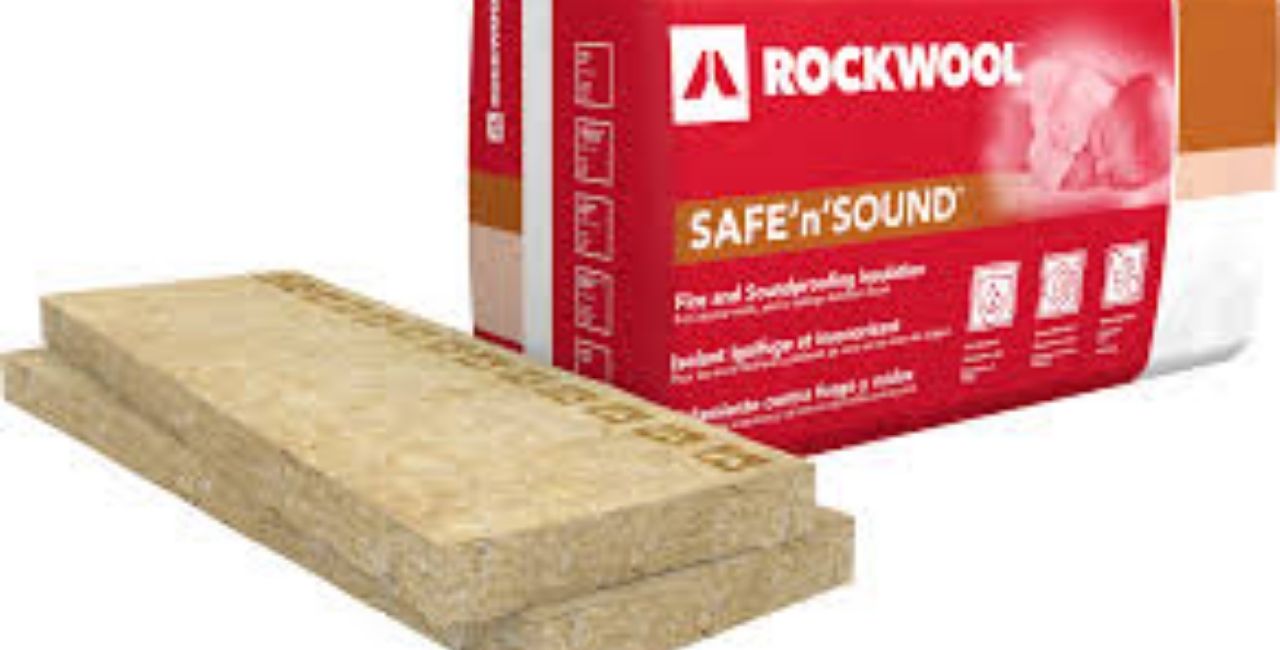
Rockwool safe and sound is a type of stone wool batt insulation designed specifically for interior applications. Made from natural volcanic rock and recycled materials, it provides excellent acoustic performance and fire resistance. Unlike traditional options, it focuses on creating peaceful environments by absorbing sound waves and blocking noise transmission.
The product comes in pre-cut batts that friction-fit between studs, eliminating the need for staples or adhesives in most cases. Available in 3-inch and 6-inch thicknesses, it suits various framing types, including wood and steel studs. For example, a standard 3-inch batt for 16-inch on-center wood studs measures 15.25 inches wide by 47 inches long, covering about 59.7 square feet per package.
This insulation earns its name from two core strengths: safety through non-combustible properties and sound control via high-density fibers. It resists mold, moisture, and pests, ensuring long-term durability. Homeowners use it in bedrooms, bathrooms, and basements to minimize disturbances from everyday activities like talking or footsteps.
History and Background of the Rockwool Company
The Rockwool Group traces its roots back to 1909 in Denmark, starting as a gravel mining operation under the name Korsør Stenforretning. Founders Henrik Johan Henriksen and Valdemar Kähler expanded into various building materials, including sand-lime bricks and fishing nets. A pivotal moment came in 1935 when Finn Henriksen, son of one founder, visited the United States and discovered stone wool technology.
Inspired by American methods, the company acquired a license from Baldwin-Hill in New Jersey to produce mineral wool in Scandinavia and Germany. Production began in 1937 at a factory in Hedehusene, Denmark, marking the birth of Rockwool’s insulation line. Initially, they used simple wooden structures and electric furnaces, but a fire in the early days highlighted the need for resilient materials—ironically underscoring the fire-resistant benefits of their product.
By the 1960s, Rockwool innovated with the “flexi process,” improving fiber quality and efficiency. The company grew internationally, establishing factories in Sweden, Norway, and beyond. Today, Rockwool operates 27 facilities worldwide, including in North America, Asia, and Europe. Their focus on sustainability includes using up to 75% recycled content in products like rockwool safe and sound.
In North America, Rockwool entered the market in the 1980s, emphasizing energy-efficient and safe building solutions. The company’s commitment to research led to certifications like GREENGUARD Gold, ensuring low emissions for indoor air quality. This history of innovation makes Rockwool a trusted name in insulation, with rockwool safe and sound embodying decades of expertise.
Manufacturing Process of Rockwool Safe and Sound
Rockwool turns natural rocks into high-performance insulation through a sophisticated process mimicking volcanic activity. It starts with sourcing basalt and diabase—volcanic rocks formed millions of years ago. These materials, combined with recycled slag from steel production, promote sustainability by reducing waste.
Workers load the raw materials into a cupola furnace heated to about 2,700°F (1,500°C). At this temperature, the mixture melts into a lava-like liquid. The molten rock then spins through high-speed wheels, creating thin fibers similar to cotton candy. A binder, often resin-based, gets added to hold the fibers together.
Next, the fibers form into mats on a conveyor belt. Machines compress them to achieve the desired density for products like rockwool safe and sound, which exceeds 2.5 pounds per cubic foot. The mats cure in ovens to set the binder, then cut into batts of specific sizes.
Quality checks ensure compliance with standards like ASTM C665 for thermal insulation and ASTM E84 for fire performance. The process uses energy-efficient methods, recycling water and heat to minimize environmental impact. This results in a product that’s durable, non-combustible, and ready for easy installation.
Key Features and Specifications
Rockwool safe and sound boasts features that set it apart in the insulation market. Its high-density structure, at over 40 kg/m³, minimizes airflow for superior sound absorption. The material complies with CAN/ULC S702 and ASTM C665 as Type 1 insulation.
Fire ratings include a flame spread index of 0 and smoke developed index of 0 per ASTM E84. It withstands temperatures over 2,150°F (1,177°C) without melting or producing toxic smoke. Acoustically, it achieves high noise reduction coefficients, often reducing sound transmission by up to 10 decibels in wall assemblies.
Sizes vary for different framing:
- For 16-inch wood studs: 3 inches thick, 15.25 inches wide, 47 inches long.
- For 24-inch steel studs: 3 inches thick, 24.25 inches wide, 48 inches long.
- 6-inch options available for deeper cavities, like basement ceilings.
It’s GREENGUARD Gold certified, meaning low volatile organic compounds (VOCs). The friction-fit design allows quick installation without tools beyond a serrated knife for cuts. These specs make it versatile for residential and light commercial use.
Benefits for Soundproofing
You gain peace and quiet when using rockwool safe and sound for soundproofing. Its dense fibers trap sound waves, preventing them from traveling through walls or ceilings. In tests, it boosts Sound Transmission Class (STC) ratings in assemblies— for instance, a single-stud wall reaches STC 52 with this insulation.
Homeowners report muffled voices and reduced TV noise between rooms. It’s especially useful in multi-story homes, where it dampens footsteps from above. Unlike lighter materials, it handles low-frequency sounds better, like bass from music systems.
Bold key benefits:
- Reduces airborne noise: Absorbs up to 95% of sound in mid-frequencies.
- Improves privacy: Ideal for bedrooms adjacent to bathrooms or home offices.
- Enhances overall comfort: Creates quieter spaces for better sleep and focus.
Pair it with resilient channels or multiple drywall layers for even greater results. Statistics show homes with proper soundproofing see up to 30% less noise complaints in shared living situations.
Benefits for Fire Safety
Safety comes first with rockwool safe and sound. As a non-combustible material, it doesn’t burn or contribute to fire spread. In fire tests, it provides up to one hour of resistance in wall assemblies, giving occupants time to evacuate.
It resists temperatures exceeding 1,000°C without releasing toxic gases, unlike some synthetic insulations. This feature saved lives in real-world fires by containing flames within compartments.
Bold key advantages:
- Non-combustible rating: Meets ASTM E136 standards.
- No toxic smoke: Reduces health risks during emergencies.
- Structural protection: Maintains integrity to support building elements longer.
Building codes often recommend it for high-risk areas like garages or kitchens. References from fire safety experts highlight its role in preventing flashovers.
Comparison with Fiberglass Insulation
When choosing between rockwool safe and sound and fiberglass, consider performance differences. Both insulate well, but stone wool excels in density and durability.
| Aspect | Rockwool Safe and Sound | Fiberglass |
|---|---|---|
| Density | >2.5 lb/ft³ | 0.5-1.5 lb/ft³ |
| Sound Absorption | Higher NRC (up to 1.05) | Lower NRC (0.8-0.95) |
| Fire Resistance | Non-combustible, >2,150°F | Combustible, melts at 1,000°F |
| Moisture Resistance | Repels water, mold-resistant | Absorbs moisture, prone to mold |
| Installation | Friction-fit, no itch | Itchy fibers, needs staples |
| Cost | Higher upfront | Lower initial cost |
| R-Value per Inch | About 3-4 | 3-4 similar |
| Environmental Impact | Up to 75% recycled | Less recycled content |
Rockwool outperforms in sound and fire, but fiberglass might suit budget projects. User tests show minimal STC differences in some walls, yet rockwool’s density provides noticeable edge in real homes. Experts like those from Soundproofing Company note both work similarly for basic damping, but rockwool wins for premium needs.
Installation Guide
Install rockwool safe and sound with confidence—it’s straightforward and tool-light. Follow these steps for best results.
Prepare the space:
- Measure stud cavities to confirm batt sizes.
- Wear gloves, long sleeves, and a mask for comfort.
- Clear debris and ensure framing is dry.
Cut and fit batts:
- Use a serrated knife to trim around outlets or pipes.
- Insert batts: Compress slightly, then release for a snug fit.
- For ceilings, add wire supports if needed for extra hold.
Handle obstacles:
- Split batts around wiring: Slice halfway, tuck over wires.
- Fill gaps with scraps to avoid voids that reduce performance.
Finish up:
- Cover with drywall immediately to contain fibers.
- Seal edges with acoustic caulk for airtightness.
Tips: For basements, combine with resilient channels to decouple vibrations. Avoid compressing too much, as it lowers effectiveness. Professionals like Matt Muenster from HGTV emphasize the “insert, compress, release” method for efficiency.

Applications in Home Improvement
Apply rockwool safe and sound in various home projects for optimal results. In basements, it quiets upstairs noise when installed in ceilings. For home theaters, it absorbs echoes, creating immersive audio experiences.
Bathrooms benefit from reduced water pipe sounds, while bedrooms gain privacy from adjacent rooms. In multi-family units, it meets code for party walls, minimizing neighbor disturbances.
Renovations often include it in interior partitions. For design elements, consider font choices for labeling your insulated areas to keep projects organized.
Examples: A Reddit user shared success in a 1942 home attic, noting easy cuts and less mess than fiberglass. Another installed it in every interior wall, reporting a “huge difference” in noise.
Pros and Cons
Weigh the advantages and drawbacks of rockwool safe and sound to decide if it fits your project.
Pros:
- Superior sound control: High density blocks noise effectively.
- Fire safety: Non-combustible for added protection.
- Mold resistance: Repels moisture, promoting healthy air.
- Easy handling: No itching, simple cuts.
- Eco-friendly: Recycled materials, sustainable.
Cons:
- Higher cost: More expensive than fiberglass.
- Heavier weight: Can be bulkier to transport.
- Limited R-value listing: Focuses on sound/fire, not thermal.
- Crumbling edges: May create dust during cuts.
- Not ideal for all sounds: Needs add-ons for impact noise like footsteps.
Overall, pros outweigh cons for those prioritizing safety and quiet.
User Reviews and Experiences
Homeowners rave about rockwool safe and sound in reviews. On Home Depot, users give it 4.8 stars, praising noise reduction in basements. One said, “It muffled footsteps significantly—worth every penny.”
Reddit threads highlight real-world tips: Users combine it with green glue for better vibration control. A forum post noted its pest resistance over fiberglass.
From Lowe’s: “Excellent for home theaters; voices don’t carry.” Some criticize quality inconsistencies, like varying batt densities, but most appreciate fire safety.
YouTube demos show easy installs, with viewers confirming perceptible quietness. Overall consensus: Effective for airborne noise, but pair with decoupling for full soundproofing.
FAQs
What makes rockwool safe and sound better for soundproofing?
Its dense fibers absorb sound waves, reducing transmission between rooms.
Is rockwool safe and sound fireproof?
Yes, it’s non-combustible and withstands high temperatures without toxic smoke.
Can I install rockwool safe and sound myself?
Absolutely—friction-fit design requires minimal tools.
How does rockwool safe and sound compare to fiberglass?
It offers better fire resistance and sound absorption, though at a higher cost.
Where should I use rockwool safe and sound in my home?
Ideal for interior walls, ceilings, and floors in noisy areas like bedrooms or basements.
Conclusion
Rockwool safe and sound delivers on its promise of quieter, safer homes through innovative stone wool technology. From its volcanic-inspired manufacturing to proven benefits in soundproofing and fire safety, this insulation stands as a smart investment. Homeowners enjoy reduced noise, enhanced privacy, and peace of mind knowing it resists flames and mold.
In summary, choose rockwool safe and sound for projects where comfort and protection matter most. It transforms ordinary spaces into serene retreats. What home improvement project will you tackle next with this versatile material?