







Techcal chart recorders stand out as trusted mechanical tools that record pressure and temperature data accurately in tough industrial settings. Professionals rely on Techcal devices because they deliver consistent performance where digital options may fail due to power issues or harsh conditions. This guide explains the background, features, uses, and best practices for Techcal chart recorders so you can choose and maintain them with confidence.
What Are Chart Recorders and Why Do They Matter?
Chart recorders create permanent records of changing conditions like pressure and temperature over time. They use a rotating circular paper chart and moving pens to draw lines that show data trends. Workers in industries such as oil and gas, manufacturing, and pipeline testing use these tools daily. The records help prove compliance with safety rules, spot problems early, and support maintenance decisions.
Mechanical chart recorders like those from Techcal need no electricity for core operation in many models. This independence makes them valuable in remote locations or during power outages. They offer clear visual proof of what happened during a test or operation, which digital logs sometimes cannot match as easily.
History and Background of Techcal
Techcal (Technology and Calibration Inc.) operates from Houston, Texas, the energy capital of the United States. The company has manufactured chart recorders since the 1980s, with ISO 9001 registration achieved in 1998 to guarantee high quality standards. Trained technicians assemble and calibrate every unit in the USA, which supports reliability and quick service.
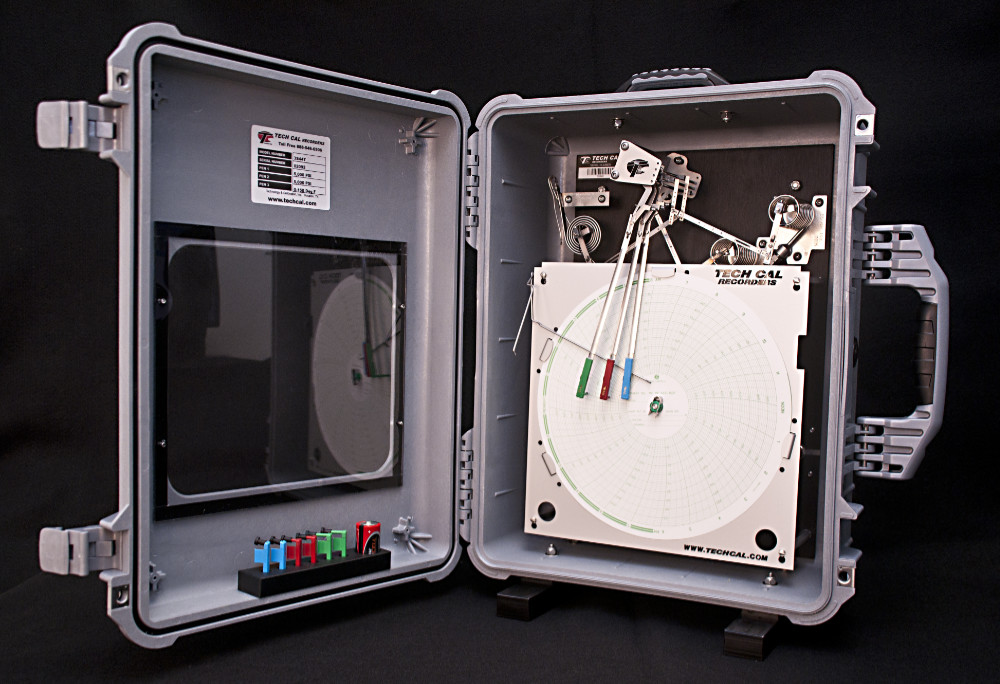
Over the years, Techcal earned respect as the go-to brand for the oil and gas sector. The company focuses on durable designs that survive rough field conditions. Sources note that Techcal provides both new and remanufactured units, along with rental options and calibration services. This full support helps customers keep equipment running without long delays.
The brand emphasizes real-world testing and customer feedback to improve products. Technicians ensure each recorder meets strict accuracy levels, typically within +/- 0.5% of full scale. This attention to detail explains why Techcal devices remain industry standards after decades of service.
Key Features of Techcal Chart Recorders
Techcal chart recorders include several standout features:
- Durable Pelican Case — Genuine Pelican Cases® provide a watertight and impact-resistant enclosure that protects internal parts from water, dust, and drops.
- Stainless Steel Internals — All moving parts use stainless steel or anodized materials to resist corrosion in humid or salty environments.
- Shatter-Resistant Window — A tough window lets users view the chart without opening the case.
- Multi-Range Capability — One unit can record up to three different pressure or temperature ranges at once.
- 12-Inch Circular Charts — Standard large charts offer clear, easy-to-read records that last for hours to weeks.
These features combine to create recorders that perform reliably in extreme conditions.
Techcal offers both battery-operated and wind-up (clockwork) models. Battery versions support run times from 30 minutes to 32 days. Wind-up models provide steady operation without batteries, ideal for long-term monitoring.
Available Models and Specifications
Techcal provides a wide selection to match different needs. Pressure ranges include 15 PSI, 100 PSI, 1,000 PSI, up to 50,000 PSI. Temperature ranges cover 0-100°F to 0-500°F.
Popular models:
- Single-pen versions for simple pressure recording.
- Dual- or triple-pen units for simultaneous pressure and temperature tracking.
- Battery models with durations such as 1 hour, 24 hours, 7 days, or 31 days.
- Wind-up models with 15-minute to 8-day rotations.
Accuracy stays high at +/- 0.5% of full scale across most models. Charts rotate clockwise, and pens use fiber-tipped designs in colors like red, blue, green, or black for easy line identification.

You can find exact model numbers like 1B100 for 0-1,000 PSI single-pen units. Many suppliers stock common configurations and offer custom builds.
For more model details, check resources like the manufacturer’s product page at https://gaboilwell.weebly.com/techcal-chart-recorder.html.
How Techcal Chart Recorders Work
Techcal recorders operate through simple mechanical principles. A clock mechanism or battery drives the chart plate to rotate at a constant speed. Bourdon tubes or similar sensors convert pressure or temperature into mechanical movement that drives the pens across the chart.
To install a chart:
- Unlock the chart hub.
- Raise the pen lifter.
- Slide the chart paper between the pens and plate, securing it in the tabs.
- Lower the pen lifter gently.
- Apply zero pressure and adjust pens to the chart zero line.
This straightforward process takes only a few minutes and ensures accurate starting points. The pens draw continuous lines that show rises, drops, and steady states over the recording period.
Applications in Oil and Gas and Beyond
Techcal recorders excel in high-pressure testing, pipeline hydrostatic tests, wellhead monitoring, and equipment calibration. Technicians use them to record pressure during fracking operations, pipeline integrity checks, and safety valve testing.
In manufacturing, they track temperature in heat treatment processes. Environmental testing and water treatment plants also benefit from their reliable logging. The rugged Pelican case allows safe use in hazardous areas classified for oil and gas work.
One common example involves recording pressure during a pipeline pressure test. The chart provides a permanent, tamper-evident record that regulators and engineers can review later.
Installation and Operation Guide
Follow these steps for safe setup:
- Inspect the unit for shipping damage upon arrival.
- Choose the correct chart paper for your time duration and range.
- Install fresh batteries or wind the clock mechanism fully.
- Mount the recorder securely at the test point.
- Connect pressure lines carefully to avoid leaks.
- Start the chart rotation and verify pen movement.
- Check zero and span settings before full operation.
Always use proper personal protective equipment and follow site safety rules.
Maintenance and Calibration Tips
Regular care keeps Techcal recorders accurate:
- Clean the case exterior after each use.
- Inspect pens for wear and replace when needed.
- Store in a dry place when not in use.
- Send for professional calibration annually or after heavy use.
Techcal and authorized service centers provide repair, calibration certificates, and parts. Remanufactured units offer a cost-effective option with full warranties.
Advantages Over Digital Alternatives
Mechanical Techcal recorders do not need power for basic function in wind-up models. They produce physical charts that serve as legal evidence. They resist electromagnetic interference and work in extreme temperatures where electronics fail. Many users report decades of service with basic care.
Troubleshooting Common Issues
If pens do not move:
- Check battery level or clock winding.
- Ensure the chart is installed correctly.
- Verify connections have no blockages.
For inaccurate readings, recalibrate or inspect sensor tubes. Most issues resolve quickly with simple checks.
Buying, Rental, and Support Options
You can buy new or remanufactured Techcal recorders from specialized suppliers. Rentals suit short-term projects. Support includes technical advice, parts, and training. Visit https://hydratechcorp.com/products/techcal-chart-recorders/ for configuration options and https://russindustrial.com/russ-industrial-solutions-products/chart-recorders/tech-cal-chart-recorders/ for industry insights.
For additional technical documentation and resources, explore https://fontlu.co.uk/.
Case Studies and Real-World Performance
In oilfield pressure testing, Techcal units have recorded data accurately during multi-day operations without failure. Pipeline companies rely on them for compliance documentation. Their stainless steel construction withstands corrosive environments better than many competitors.
The Future of Mechanical Chart Recorders
While digital data loggers grow popular, mechanical devices like Techcal remain essential for backup records, hazardous areas, and validation. Hybrid solutions may combine both technologies in coming years.
Techcal continues to innovate while preserving the proven mechanical reliability that built its reputation.
Conclusion
Techcal chart recorders offer unmatched durability, accuracy, and simplicity for pressure and temperature monitoring in demanding industries. From their Houston, Texas roots and ISO 9001 quality standards to rugged Pelican cases and stainless steel internals, Techcal delivers dependable performance that professionals trust. Whether you need short-term testing or long-duration recording, these mechanical recorders provide clear, reliable data.
In summary, Techcal stands out for its made-in-USA craftsmanship, wide range options, and strong support network. What specific application or model are you considering for your next project? Share your thoughts below to continue the conversation.