






Introduction to Comanche Territory
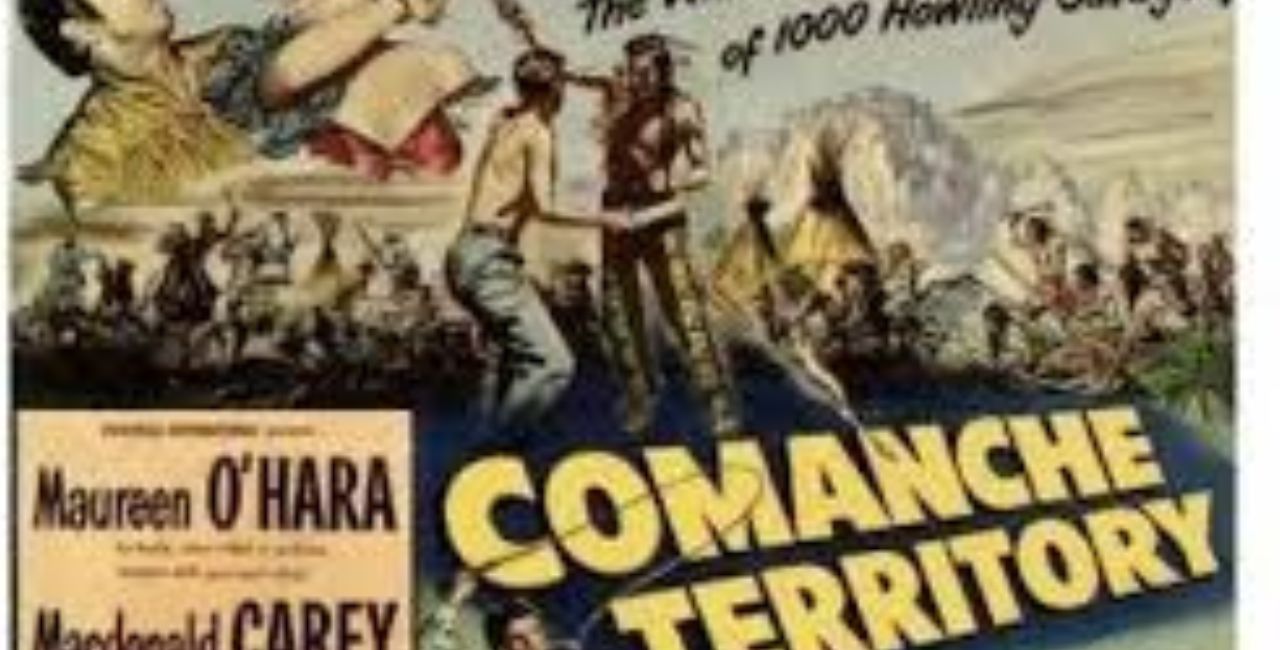
The film comanche territory takes viewers back to the rugged American frontier. Released in 1950, this Western adventure captures the clash between settlers and Native Americans. Directed by George Sherman, it stars Macdonald Carey as the legendary Jim Bowie. He works to keep peace amid greed for silver on Comanche lands. Maureen O’Hara plays Katie Howard, a strong-willed saloon owner caught in the drama. The story unfolds in a town called Crooked Tongue, where tensions rise over a government treaty. This movie blends action, romance, and historical hints, making it a standout in the Western genre. Fans of classic films often revisit comanche territory for its vivid Technicolor scenes and fast-paced plot.
Western films like this one reflect the era’s fascination with frontier life. They show heroes facing moral choices in lawless lands. Comanche territory stands out because it highlights treaty negotiations, a real issue in U.S. history. The film runs for 76 minutes, packing in chases, fights, and twists. It earned $1.6 million at the box office, proving its appeal. Today, it remains a gem for those studying old Hollywood Westerns. Let’s dive deeper into what makes this film tick.
The Plot of Comanche Territory: A Tale of Conflict and Resolution
The story kicks off with a fragile peace. A treaty protects comanche territory from settlers. But silver discovery changes everything. The U.S. government sends Jim Bowie to negotiate a new deal. Bowie, known for his knife, teams up with Dan’l Seeger, played by Will Geer. They aim to allow mining without sparking war.
Enter Katie Howard and her brother Stacey. They run a saloon in Crooked Tongue. Stacey plots to raid the Comanche for the silver. Katie starts as tough and scheming but softens as she falls for Bowie. The film builds suspense with hidden gun suppliers and ambushes. Bowie uncovers a gang arming the settlers. He teaches the Comanche about his famous knife, forging alliances.
Key moments include:
- Bowie’s arrival: He rides into town, sensing trouble right away.
- The treaty talks: Bowie meets Chief Quisima, facing cultural clashes.
- The raid plan: Stacey rallies settlers, ignoring the risks.
- Climactic showdown: Fights erupt, testing loyalties.
The narrative avoids simple good-vs-evil tropes. It shows how greed drives conflict. In the end, Bowie’s diplomacy wins, but not without losses. This plot mirrors real frontier struggles, adding depth.
Cast and Characters: Stars Who Brought Comanche Territory to Life
The cast elevates comanche territory beyond a standard Western. Each actor brings unique flair.
Macdonald Carey as Jim Bowie: Carey portrays Bowie as a skilled scout and peacemaker. Born in 1913, Carey started in radio before films. He loaned from Paramount for this role. His calm demeanor fits Bowie’s historical image as a fighter and inventor. Carey’s career spanned soaps like Days of Our Lives, earning him Emmys. In comanche territory, he shines in action scenes, like teaching knife skills.
Maureen O’Hara as Katie Howard: O’Hara’s fiery performance steals scenes. Known as the “Queen of Technicolor,” she was born in Ireland in 1920. She mastered the bullwhip for this film, snapping cigarettes from mouths. O’Hara’s roles often showed strong women, as in The Quiet Man. Here, Katie evolves from villainous to heroic, adding romance. O’Hara recalled the Arizona heat during filming in her memoir.
Will Geer as Dan’l Seeger: Geer plays Bowie’s loyal sidekick. Famous later as Grandpa Walton on The Waltons, Geer was born in 1902. His folksy charm fits the emissary role. Geer faced Hollywood blacklisting in the 1950s but bounced back. In the film, he provides comic relief and wisdom.
Charles Drake as Stacey Howard: Drake embodies the greedy brother. Born in 1917, he appeared in many Westerns. His villainy drives the plot, clashing with Bowie.
Pedro de Cordoba as Quisima: As the Comanche chief, de Cordoba adds dignity. Born in 1881, he specialized in authoritative roles.
Other notables include Ian MacDonald as Walsh and Rick Vallin as Pakanah. Uncredited actors like James Best and Glenn Strange fill the world. The ensemble creates a lively frontier town.
Production and Filming: Behind the Scenes of Comanche Territory
George Sherman directs comanche territory with efficiency. Born in 1908, Sherman helmed over 100 B-Westerns. He worked for Universal after Columbia. This film marks his skill in outdoor shoots.
The script comes from Lewis Meltzer’s story, adapted by Oscar Brodney. They weave history with fiction. Originally titled The Bowie Knife, it shifted focus. Producer Leonard Goldstein oversaw the $1 million budget.
Filming happened in Oak Creek Canyon, Arizona. Locations like Sedona and Red Rock Crossing provide stunning backdrops. Technicolor captures red rocks and blue skies. Cinematographer Maury Gertsman uses wide shots for chases. Editor Frank Gross keeps the pace tight.
Challenges arose: O’Hara’s laryngitis delayed shooting. The team scouted Kanab, Utah, but chose Arizona for variety. Music by Frank Skinner adds tension with thrilling scores.
For movie buffs, fonts in posters evoke the era. Sites like Fontlu offer similar Western styles for recreations.
Trivia highlights:
- Bowie’s knife invention ties to real history.
- A goof: The film sets in 1866, but Bowie died in 1836.
- O’Hara’s whip mastery became legendary.
Universal distributed it on May 1, 1950. It fits the post-WWII Western boom.
Historical Context: The Real Comanche Territory and Jim Bowie
Comanche territory draws from U.S. expansion. The Comanche roamed the Great Plains from the 1700s. Known as fierce warriors, they controlled vast lands in Texas and beyond. Treaties often failed, leading to wars.
Jim Bowie was real: Born in 1796, he fought in Texas independence. He died at the Alamo in 1836. Famous for his knife, designed for combat. The film idealizes him, ignoring his slave-trading past.
Silver mining echoes 19th-century rushes. Greed displaced tribes. The Indian Wars (1850s-1890s) involved broken pacts.
The movie softens history: Comanche appear noble, unlike many era films. It nods to President Andrew Jackson’s policies, though inaccurate.
Understanding this context enriches viewing. It shows Hollywood’s take on Manifest Destiny.
Reception and Legacy: How Comanche Territory Holds Up Today
Critics gave mixed reviews. Rotten Tomatoes has a low Tomatometer from two: Steve Crum called it “so-so,” Dennis Schwartz noted no surprises. IMDb rates 5.6/10 from 1,911 votes.
Users praise scenery and O’Hara. One said: “Classic western drama at its finest.” Another: “Impressively shot in Technicolor.”
Box office success: $1.6 million. It boosted O’Hara’s Universal career.
Legacy: Quentin Tarantino screened it at Cannes 2025, tributing Sherman. Available on streaming, it appeals to classic fans.
Compared to peers like Tomahawk (6.4/10), it holds average. Yet, its themes resonate in modern discussions on indigenous rights.
The Western Genre: Where Comanche Territory Fits In
Westerns dominated 1950s Hollywood. They explored American identity. Comanche territory is a B-Western: Quick, low-budget, action-focused.
Influences: John Ford’s epics. Sherman’s style echoes serials.
Evolution: From silent films to color spectacles. This one uses Technicolor for impact.
Statistics: Over 2,000 Westerns made 1930-1960. Many featured Native conflicts.
Tips for fans:
- Watch for location beauty.
- Note historical tweaks.
- Compare to The Searchers.
Key Themes in Comanche Territory
The film tackles:
- Peace vs. Greed: Bowie seeks diplomacy; settlers want wealth.
- Cultural Clash: Comanche traditions vs. expansion.
- Redemption: Katie’s arc shows change.
Quotes highlight: “I’ll get it out as quick as I can,” on a wound, showing grit.
Similar Films to Comanche Territory
Explore these:
- Border River (1954): Sherman directs another frontier tale.
- War Arrow (1953): O’Hara in more Western action.
- Tomahawk (1951): Indian treaty drama.
- The Lone Hand (1953): Silver mining intrigue.
- Chief Crazy Horse (1955): Native perspective.
Each shares elements like chases and moral dilemmas.
FAQs About Comanche Territory
What is Comanche Territory about? It’s a 1950 Western where Jim Bowie negotiates a treaty to protect comanche territory from silver-hungry settlers.
Who stars in Comanche Territory? Macdonald Carey as Bowie, Maureen O’Hara as Katie, Will Geer as Seeger.
Where was Comanche Territory filmed? Mainly in Oak Creek Canyon, Arizona, for its scenic red rocks.
Is Comanche Territory historically accurate? It takes liberties; Bowie died in 1836, but film sets later.
How can I watch Comanche Territory? Check streaming on Fandango or buy DVDs.
Conclusion: Why Comanche Territory Endures
In summary, comanche territory delivers a gripping Western with strong performances, beautiful locations, and timely themes. From Bowie’s peace efforts to Katie’s transformation, it captures frontier spirit. Despite mixed reviews, its legacy persists through tributes and availability. This film reminds us of history’s complexities in entertaining form.
What draws you to classic Westerns like comanche territory? Share your thoughts!