






Introduction & Release
Apple officially unveiled the iPhone 17 lineup at its “Awe Dropping” event on September 9, 2025. Preorders began on September 12, 2025, and the devices started shipping on September 19, 2025.
The overall lineup is more expansive than just a single model: there are four new iPhones:
-
iPhone 17 (standard)
-
iPhone 17 Pro
-
iPhone 17 Pro Max
-
A new model called iPhone Air (sometimes referred to as “Slim”/“Air”) which replaces what used to be the Plus variant.
What’s New & What’s Upgraded
Apple has introduced several major upgrades and changes with iPhone 17—some incremental, some more substantial. Here’s a summary of what’s new or improved:
1. Display & Design
-
The standard iPhone 17 has grown in screen size slightly: ~ 6.3-inch display, up from 6.1 inches in previous generation non-Pro model.
-
All models in the lineup now come with ProMotion 120Hz adaptive refresh rates (variable down to 1Hz) for smoother visuals and better responsiveness. Previously, 120Hz was reserved for Pro versions only.
-
Peak brightness is improved to ~ 3,000 nits, enhancing visibility in bright outdoor lighting.
-
The front cover uses a new Ceramic Shield 2, with enhancements in scratch resistance and durability. Anti-reflective coatings have also been improved.
-
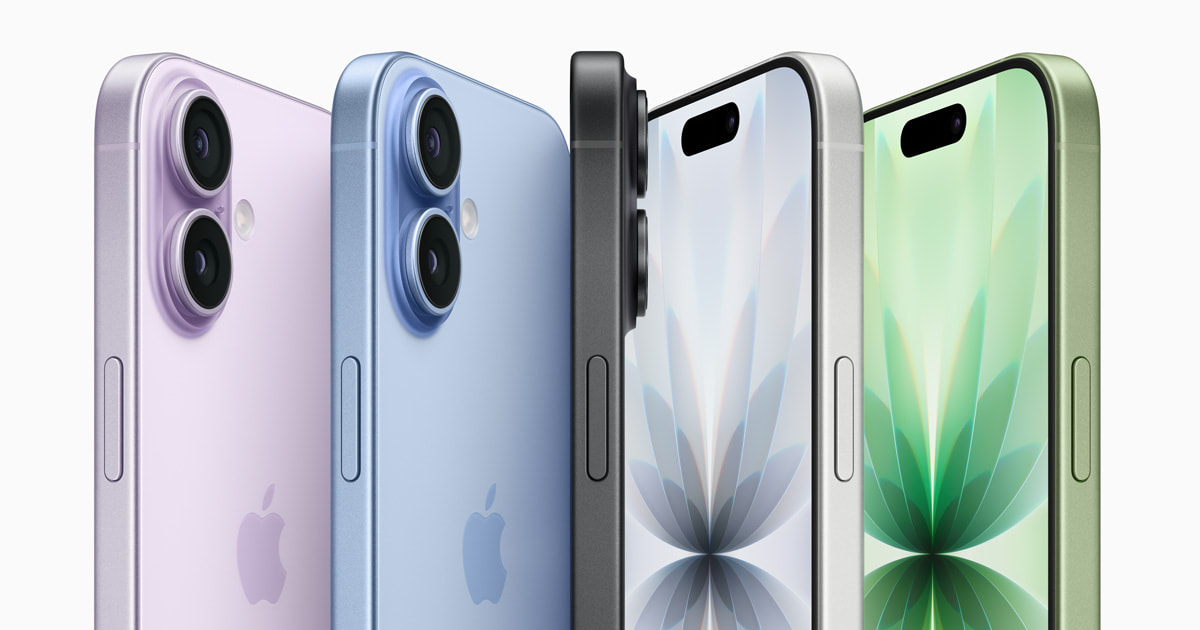
New color options: Lavender, Mist Blue, Sage, Black, White for standard model. The Air, Pro, and Pro Max variants have their own palette.
2. The iPhone Air (Slim Variant)
-
The iPhone Air is the thinnest iPhone ever at around 5.6 mm thickness. This is a huge leap in design, targeting users wanting premium feel with lighter/slimmer form factor.
-
It features a titanium frame for strength while reducing weight.
-
Single rear camera (versus dual or triple in other models) in most renders/leaks, emphasizing design and portability.
3. Cameras & Imaging
-
On the standard iPhone 17, the rear camera system is now a dual 48MP “fusion” camera setup, combining ultrawide and improved main lens sensors.
-
Better front-facing camera: upgraded to about 18MP, with a larger / more flexible sensor, for higher quality selfies/video and broader framing.
-
Pro / Pro Max models offer more: triple-48MP rear cameras, improved telephoto options (stronger zoom), possibly enhancements in optical zoom, better ultrawide performance, ProRes RAW, etc.
4. Processing Power & Chips
-
The standard iPhone 17 runs on Apple’s A19 chip—a more advanced processor likely built on a newer node (often rumored 3nm) for higher efficiency and performance.
-
Pro / Pro Max / Air variants also use updated chips—“A19 Pro” in higher-end models.
-
Alongside the CPU/GPU, Apple introduced a new networking chip, N1, for improved Wi-Fi, Bluetooth, and general wireless / connectivity enhancements.
5. Battery, Charging & Efficiency
-
Battery life has been improved: the standard iPhone 17 offers up to 30 hours of video playback, while the Pro Max model pushes higher (~39-hours) in some use cases.
-
Charging: Faster wired or MagSafe charging improvements have reportedly been made. The standard 17 can reportedly reach ~50% in ~20 minutes with a 40W adapter. MagSafe charging also improved.
6. Other Features & Connectivity
-
eSIM support in many regions, possibly replacing physical SIM in some models.
-
Safety and communication: Emergency SOS via satellite, crash detection, others continue.
-
Connectivity: Wi-Fi 7, Bluetooth 6, Thread networking, better modem / 5G performance.
Pricing & Storage
-
The standard iPhone 17 starts at US$799 (with 256GB storage as base).
-
iPhone Air starts at $999.
-
iPhone 17 Pro starts at $1,099.
-
iPhone 17 Pro Max starts at $1,199, and there’s also a 2TB storage option for the Pro Max.
Storage capacities have generally increased, with 256GB base on many models, higher ceiling options for capacity.
Design & Aesthetics
The iPhone 17 line introduces some of the biggest design changes in recent years:
-
The new camera plateau/bar design: in many leaks and images the Pro and Air variants show a camera “bar” or wide bump that stretches more across the back rather than discrete module islands. This aids aesthetic continuity and may help in layout of optics.
-
Slimming down of the body, especially with iPhone Air: ultra-thin profile (~5.5-5.6 mm), which has required trade-offs in battery size, but gives a sleek premium feel.
-
Use of premium materials: Titanium frame for the Air model, upgraded glass (Ceramic Shield 2), improved scratch / drop resistance, and advanced coatings for reflection, durability.
Comparison with iPhone 16 & What’s Changed
To understand how big a jump iPhone 17 is, it’s helpful to compare with the iPhone 16 / iPhone 16 Plus / Pro series:
| Feature | iPhone 16 (Standard) | iPhone 17 (Standard) |
|---|---|---|
| Display Size | ~6.1″ | ~6.3″ |
| Refresh Rate | 60Hz for standard; Pro had 120Hz | 120Hz ProMotion across all models |
| Base Storage | 128GB in many earlier base models | 256GB as base for standard |
| Selfie Camera | 12MP | Upgraded ~18MP or more in standard, with larger/new sensor |
| Battery Life | Good but less in demanding usage | Noticeable improvement in video playback and general usage |
| Processor | A18 (or whatever newest at that time) | A19 / A19 Pro, with more efficient process |
| Design Slimming | Some improvements, but Pro/Plus models still thick in certain ways | Air model is groundbreaking in thinness; design tweaks across line. |
Pros & Potential Drawbacks
What’s Great
-
Smooth visuals everywhere: With 120Hz ProMotion on the base model, UI feels more responsive; animations and scrolling are smoother.
-
Better cameras: Dual 48MP rear on standard, better front camera, more zoom capabilities on Pro. For photography-enthusiasts this is a solid upgrade.
-
More storage by default: Starting 256GB on base helps those who are frustrated with 128GB in prior base models.
-
Design & build quality: Slimmer frame, premium materials, durability enhancements. The Air variant is especially attractive for those who dislike bulky phones.
-
Connectivity & features: Wi-Fi 7, better Bluetooth, strong wireless/emergency features, improved charging speed.
-
Battery improvements: Better battery life has been confirmed in specs / leaks—video playback hours improved, efficiency gains from the new chip.
What May Be Less Perfect / Trade-Offs
-
Price increases for upper capacity or Pro models: While base prices held steady for the standard model, the Pro/Max and Air models with higher specs or storage may see steeper price tags.
-
Battery vs slim design trade-offs: The ultra-thin Air model might compromise battery capacity or longevity under heavy use due to its thinness. Also, slim phones tend to heat more or be less substantial in hand.
-
Camera bumps / form factor bulk: The new camera bar or plateau may add to thickness or weight in the region of the cameras; pockets / cases may feel different.
-
Incremental vs transformative: Some users may feel that while improvements are nice, they may not be revolutionary compared to iPhone 16 — especially for those already on a recent model.
-
Charging speed limits: Despite improvements, Apple still doesn’t match some competitors in raw charging wattages, especially for wired charging or fast charging in budget.
Market & Ecosystem Implications
-
Replacing “Plus” with Air / Slim variant: Apple phasing out the Plus line in favor of the new Air / Slim model signals a shift in product strategy, likely responding to demand for thinner, lighter phones, and design prestige.
-
Storage baseline shift: By making 256GB the base for standard models, Apple continues trend of pushing more storage in base models, possibly because apps / media sizes keep growing.
-
Feature trickle-down: 120Hz, better cameras, etc., are no longer Pro-only – this levels up the standard models significantly, making older Pro models less compelling for some.
-
Design turnover: New camera bar design, new materials, better durability—these help maintain Apple’s premium image amid competitive pressure from high-end Android phones.
Pricing & Global Availability
-
In the U.S., the iPhone 17 starts at US$799 for the standard model. Air, Pro, Pro Max are priced higher respectively.
-
In Europe, UK, and other markets, the pricing reflects storage and components – prices rise steeply with capacity and model. E.g. in Spain, iPhone 17 at ~€959 for 256GB going higher for bigger storage.
-
Pre-orders and availability typical: Preorders from ~September 12, availability in stores & delivery around September 19.
Software & OS: iOS & Intelligence
-
Ships with the latest OS—iOS 26 (or whatever Apple calls it post-iPhone 16)—which brings new features, privacy improvements, smoother animations, better adaptive power management.
-
AI / Machine Learning: Better computational photography, smarter power management, possibly more AI features baked in for camera, voice, etc. Some rumours suggest more on-device intelligence.
Who Should Upgrade & Who Might Wait
If you’re considering whether to buy iPhone 17, here are some scenarios:
You Should Upgrade If:
-
You have an older iPhone (say iPhone 12 / 13) and want significantly better camera, performance, battery, display smoothness.
-
You value having more storage, especially with 256GB baseline.
-
You want the slimmest, most premium design: then the iPhone Air offers something special.
-
You care about having the latest connectivity (WiFi 7, etc.), futureproofed features.
Maybe Wait If:
-
You have iPhone 16 Pro / Pro Max – those already have higher refresh rate, strong cameras; some gains may be marginal.
-
You are budget conscious and don’t need top tier storage or camera.
-
Battery is your priority: sometimes thinner design might compromise long-term battery temperature / longevity under heavy loads.
-
Charging speed isn’t much improved; you may prefer waiting for a later generation if you want really fast wired charging.
Final Verdict
The iPhone 17 represents a strong, evolutionary update from Apple. It keeps what works, upgrades where it counts (display, cameras, chip, storage), and introduces a bold design move with the Air model. For many users, this is the most compelling standard iPhone release in several years, particularly because many “Pro” features have trickled down to the regular iPhone 17.
It isn’t a radical break from the past, but in Apple’s strategy, refinements and incremental innovation are part of the strength: reliability, ecosystem, premium build, resale value etc. For those who skipped iPhone 16, the 17 offers plenty of reasons to buy. For early adopters of the Pro/Max, the decision will depend on how much value you place on the camera setup, slim design, and latest wireless / performance gains.
Frequently Asked Questions (FAQs)
Q: Is the iPhone 17’s ProMotion display a big deal?
Yes—especially if you’re upgrading from a model with 60Hz. The jump to 120Hz (with adaptive refresh rate down to 1Hz) means smoother UX, better animations, and a more responsive feel overall.
Q: How much battery life improvement does the iPhone 17 have?
Reports suggest noticeable improvements—standard 17 getting more video playback hours, Pro / Pro Max models more so. Exact real-world usage will of course vary.
Q: Is iPhone Air model worth it?
For those wanting the thinnest, most elegant design and who can live with some trade-offs (like possibly less battery under heavy use, fewer cameras), the Air is very compelling.
Q: Does it support fast charging or wireless improvements?
Yes. There are speed improvements both wired and MagSafe. Also upgraded wireless tech (Wi-Fi 7, Bluetooth 6, etc.).